



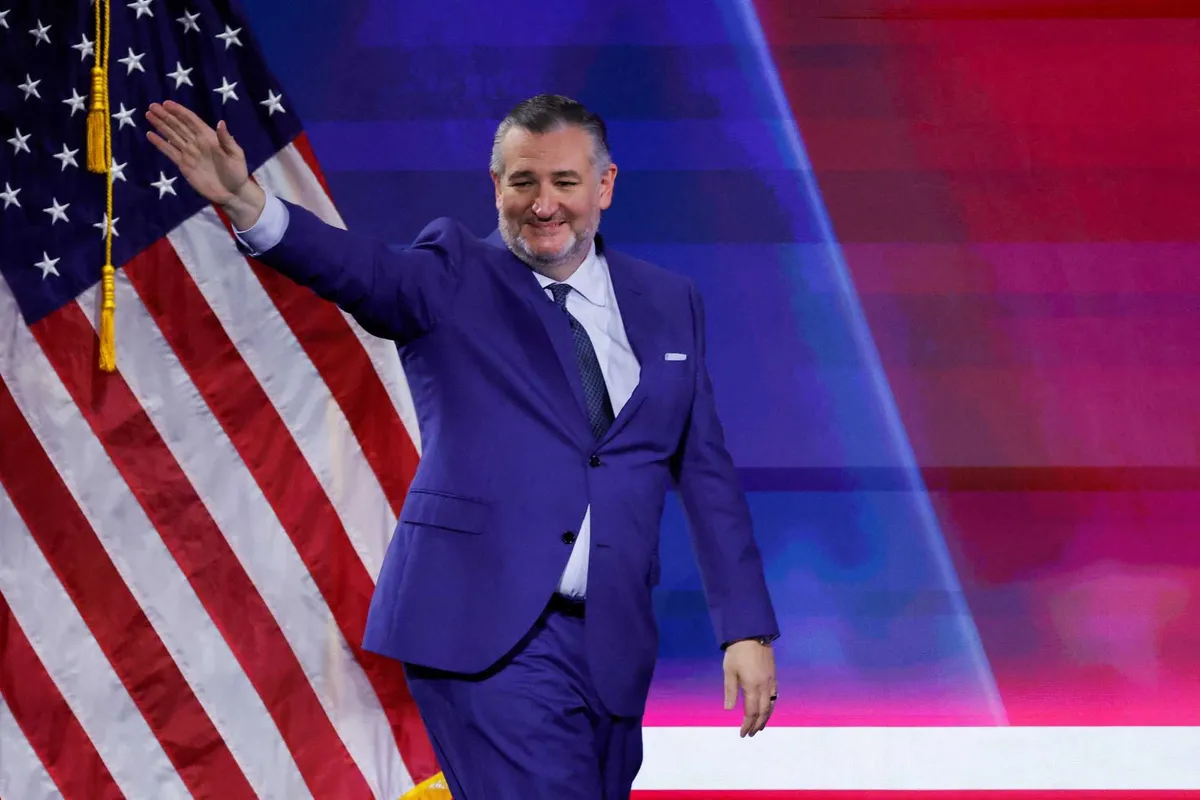
This Ted Cruz biography covers the career of one of the most prominent Republican voices in the U.S. Senate. Rafael Edward “Ted” Cruz has served as the junior United States Senator from Texas since 2013, built a national profile through a competitive 2016 presidential run, and currently chairs the powerful Senate Commerce Committee. His path from a courtroom litigator to one of the Senate’s most recognizable figures makes for one of the more closely followed political careers of the last two decades.
In this guide, we’ll walk through his early life and education, his legal career as Texas Solicitor General, his rise in the U.S. Senate, his 2016 presidential campaign, and where his political career stands today. If you’re also interested in the careers of other major U.S. political figures, our Condoleezza Rice biography covers a similar path from academia into the highest levels of American government.
Early Life and Education
Ted Cruz was born Rafael Edward Cruz on December 22, 1970, in Calgary, Alberta, Canada, where his parents were working in the oil industry at the time. His father, Rafael Cruz, emigrated from Cuba, while his mother is American, which gave Cruz Canadian citizenship at birth in addition to his U.S. citizenship — a fact that became a point of public discussion during his later political campaigns. He formally renounced his Canadian citizenship in 2014 after his Senate career had already begun.
Cruz attended Princeton University, where he studied public policy and competed on the school’s debate team, earning a reputation as a formidable debater. He graduated with a Bachelor’s degree before going on to attend Harvard Law School, earning his Juris Doctor and graduating magna cum laude. During law school, he worked on the staff of the Harvard Law Review and gained early recognition for his academic performance.
Early Legal Career
Following law school, Cruz clerked for Chief Justice William Rehnquist of the U.S. Supreme Court, one of the most competitive and prestigious positions available to a young lawyer. He went on to work in private practice and later served in government legal roles during the George W. Bush administration, including a position at the Federal Trade Commission.
From 2003 to 2008, Cruz served as the Solicitor General of Texas, the state’s chief appellate lawyer, appointed by then-Attorney General Greg Abbott. In this role, he argued multiple cases before the U.S. Supreme Court on behalf of the state, building a national reputation as a skilled appellate litigator well before he ever ran for elected office.
U.S. Senate Career (2013–Present)
Cruz was first elected to the U.S. Senate in 2012, defeating the establishment-backed candidate in the Republican primary before winning the general election, and was sworn in as Texas’s junior senator in January 2013. He quickly became a prominent voice among Senate conservatives, playing a leading role in the 2013 federal government shutdown over efforts to defund the Affordable Care Act.
Cruz was reelected to a second term in 2018, narrowly defeating Democratic challenger Beto O’Rourke in one of the most closely watched Senate races of that cycle, and won a third term in November 2024, defeating Democrat Colin Allred. His current term keeps him in the Senate through 2030. Since January 2025, Cruz has served as Chairman of the Senate Commerce, Science, and Transportation Committee, having previously served as the committee’s ranking member from 2023 to 2025.
The 2016 Presidential Campaign
In 2016, Cruz launched a campaign for the Republican presidential nomination, positioning himself as a strong conservative alternative within a crowded primary field. He won several state primaries and caucuses, including a notable victory in the Iowa caucuses, and remained one of the last major candidates standing before ultimately losing the nomination to Donald Trump. The campaign significantly raised his national profile and cemented his status as one of the most prominent conservative voices in the Republican Party.
Despite a sometimes contentious primary rivalry with Trump, Cruz went on to campaign for him in the general election and has since maintained a working relationship with the Trump-aligned wing of the Republican Party throughout his subsequent Senate terms.
Cruz confirmed in 2024 that he would seek reelection to the Senate rather than run for president again that cycle, choosing to focus his efforts on defending his Texas seat.
Key Legislative Focus Areas
Throughout his Senate career, Cruz has focused on a consistent set of policy priorities:
- Technology, telecommunications, and space policy through his role on the Senate Commerce Committee
- Immigration enforcement, including sponsoring legislation such as the Mandatory E-Verify Act
- Judicial nominations and federal courts oversight as chairman of the Judiciary Subcommittee on Federal Courts
- Energy policy and issues specific to Texas, including bills addressing federal land and resource management in West Texas
- National security and defense industrial policy, including bipartisan legislation on defense manufacturing capacity
He has also been known to work across the aisle on select bipartisan bills, co-sponsoring legislation with Democratic senators on issues ranging from defense manufacturing to foreign policy oversight.
Committee Assignments
Beyond chairing the Commerce Committee, Cruz has held seats on several other influential Senate committees over the course of his career:
- Senate Judiciary Committee, including chairing its Subcommittee on the Constitution
- Senate Foreign Relations Committee, including chairing its Subcommittee on Western Hemisphere, Transnational Crime, Civilian Security, Democracy, Human Rights, and Global Women’s Issues
- Senate Rules and Administration Committee
- Senate Judiciary Subcommittee on Federal Courts, Oversight, Agency Action, and Federal Rights
These assignments have positioned Cruz as an active voice on judicial confirmations, foreign policy in Latin America, and the regulatory reach of federal agencies throughout his Senate tenure.
Notable Public Moments
Several moments from Cruz’s Senate career have drawn significant national media attention over the years. During the 2013 government shutdown, he delivered a marathon 21-hour floor speech opposing the Affordable Care Act, reading passages from Dr. Seuss’s Green Eggs and Ham as part of the address — a moment that became widely referenced in national political coverage.
In February 2021, Cruz drew widespread criticism after traveling to Cancún, Mexico, during a severe winter storm that left millions of Texans without power, later returning early and describing the trip as a mistake in hindsight. He also drew national attention in January 2021 when he objected to certifying certain state electoral votes during the joint session of Congress, a move that was widely covered and debated across the political spectrum.
Judicial and Legal Advocacy
Cruz has remained closely involved in judicial nomination battles throughout his Senate career, drawing on his own background as a former Supreme Court clerk and state Solicitor General. He has been a vocal participant in confirmation hearings for federal judges and Supreme Court nominees, frequently using his background in appellate law to question nominees on constitutional interpretation and judicial philosophy.
Cruz married Heidi Nelson in 2001, and the couple has two daughters. Heidi Cruz has had her own notable career in finance and public policy. Outside of politics, Cruz has spoken publicly about his interest in constitutional law, debate, and — perhaps less expected for a U.S. senator — his enthusiasm for board games and comic books, both of which he has referenced in interviews and public appearances over the years.
2026 Political Landscape
As the 2026 midterm election cycle unfolds, Cruz has remained an active and visible figure in Texas Republican politics, campaigning alongside state leaders and speaking publicly about the stakes of the election for both Texas and national politics. While Cruz himself is not on the ballot this cycle, having secured his current term through 2030, he has been actively involved in supporting Republican candidates in Texas’s other closely watched statewide races.
Legacy and Political Influence
Cruz is often cited as one of the most prominent conservative constitutionalists in the modern Senate, known for his background in appellate law and his willingness to take firm ideological positions even when they put him at odds with Senate leadership from his own party. His 2016 presidential run cemented him as a lasting figure within the conservative movement, and his continued chairmanship of the Commerce Committee gives him substantial influence over technology, transportation, and telecommunications policy heading into the back half of the decade.
Supporters frequently point to his record on judicial nominations, immigration enforcement, and constitutional litigation as central to his political identity, while critics have focused on moments like the 2021 Cancún trip and his role in the 2013 shutdown as points of ongoing debate. Regardless of perspective, Cruz remains one of the most closely watched and frequently quoted senators in Washington.
Frequently Asked Questions
Where was Ted Cruz born?
Cruz was born in Calgary, Alberta, Canada, on December 22, 1970, to a Cuban-American father and an American mother, which gave him dual citizenship until he renounced his Canadian citizenship in 2014.
What is Ted Cruz’s educational background?
He earned his Bachelor’s degree from Princeton University and his Juris Doctor from Harvard Law School, graduating magna cum laude.
What position does Ted Cruz currently hold?
He is the junior United States Senator from Texas, a position he has held since January 2013, and currently chairs the Senate Commerce, Science, and Transportation Committee.
Did Ted Cruz run for president?
Yes. He ran for the Republican presidential nomination in 2016, ultimately losing to Donald Trump after remaining a top contender through much of the primary season.
Who did Ted Cruz clerk for after law school?
He clerked for U.S. Supreme Court Chief Justice William Rehnquist, one of the most sought-after clerkships available to young lawyers.
What committees does Ted Cruz serve on?
He chairs the Senate Commerce Committee and also holds seats on the Judiciary, Foreign Relations, and Rules committees.
Is Ted Cruz still a U.S. Senator?
Yes. He won a third Senate term in November 2024 and is set to remain in office through 2030.
Final Thoughts
From a childhood spent between Canada and Texas to Harvard Law School, a Supreme Court clerkship, and now more than a decade in the U.S. Senate, Ted Cruz’s career reflects a consistent focus on law, policy, and conservative politics. As chairman of the Senate Commerce Committee and a fixture of Texas Republican politics, his influence on national policy debates continues well into his third Senate term.